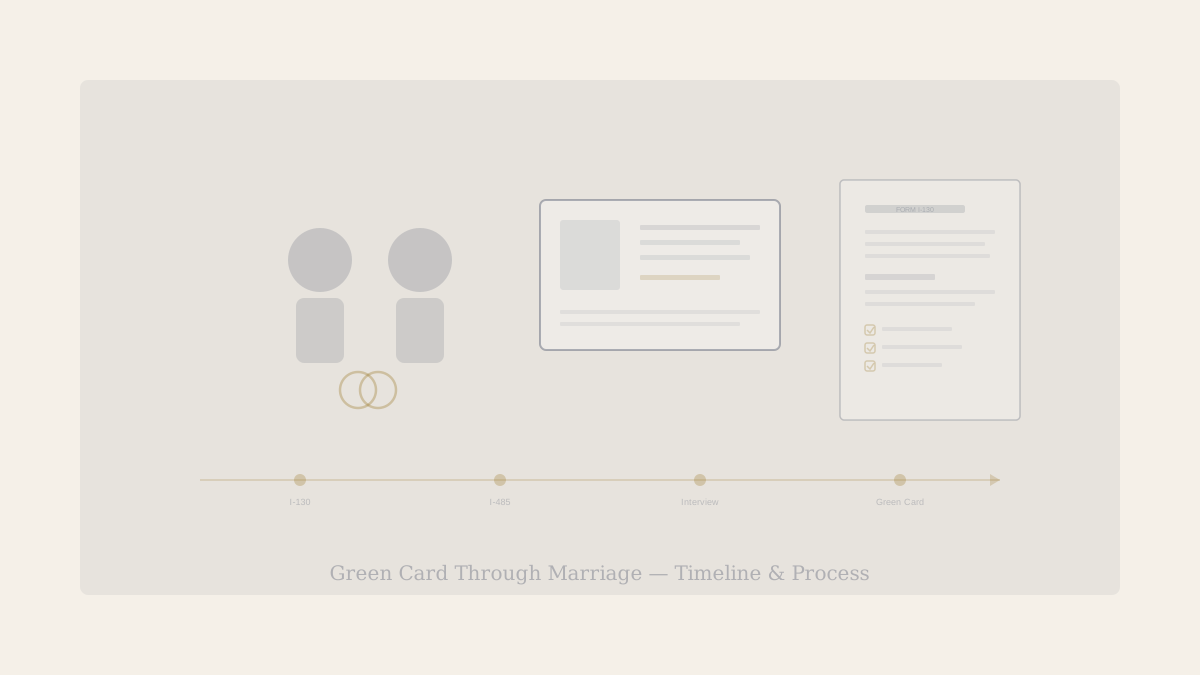
Marriage to a U.S. citizen or lawful permanent resident is one of the most common paths to a green card — but the distance between “married” and “permanent resident” is a multi-step federal process that runs 10 to 24 or more months, moves through USCIS and sometimes the Department of State, and costs thousands of dollars in filing fees alone. The marriage green card process, the timeline, and the total cost differ significantly depending on two things: whether the sponsoring spouse is a U.S. citizen or a green card holder, and whether the immigrant spouse is inside the United States (adjustment of status) or abroad (consular processing).
This guide walks the full marriage green card process step by step for both paths — the I-130 petition, adjustment of status, consular processing, realistic 2026 timelines, costs, and the conditional-residence step that catches many couples off guard. It is written by a New York immigration attorney and is intended as a general overview, not individualized legal advice. It complements two companion posts: our detailed walkthrough of what happens at a USCIS marriage green card interview and our guide for Iranian-American couples facing country-specific challenges.
USCIS fees, forms, and processing times change frequently. The figures in this post are current as of the publication date. Verify all fees and processing times at uscis.gov or with qualified counsel before filing.
The Two Variables That Determine Your Path
Before examining the marriage green card process itself, it helps to understand the two forks that determine which path your case will follow, how long it will take, and what forms you will file.
U.S. Citizen Spouse vs. Green Card Holder Spouse
Under the Immigration and Nationality Act, a spouse of a U.S. citizen is classified as an “immediate relative.” Immediate relatives are exempt from the annual numerical limits on immigrant visas — there is no cap and no visa-bulletin waiting period. When a U.S. citizen files an I-130 petition for a spouse, the immigrant visa is immediately available upon approval of the petition (or, for adjustment of status cases, upon concurrent filing).
A spouse of a lawful permanent resident (green card holder), by contrast, falls into the F2A family preference category. F2A visas are subject to annual numerical limits. Whether a visa number is immediately available depends on the Department of State’s monthly visa bulletin. In recent years, the F2A category has often been current or nearly current for most countries, meaning minimal additional wait — but this fluctuates, and in some periods the wait can extend to months or longer. The practical difference is significant: a spouse of a citizen can typically file the I-130 and I-485 concurrently, while a spouse of an LPR may need to wait for a visa number before filing the I-485 or proceeding to consular processing.
Adjustment of Status (Inside the U.S.) vs. Consular Processing (Abroad)
Adjustment of status (AOS) allows an immigrant spouse who is already lawfully present in the United States to apply for permanent residence through Form I-485 without leaving the country. Consular processing is for immigrant spouses who are abroad — the approved I-130 petition is forwarded to the National Visa Center (NVC) and then to a U.S. embassy or consulate, where the immigrant spouse attends an interview and receives an immigrant visa.
The eligibility determination for AOS vs. consular processing is fact-specific. Generally, AOS requires that the immigrant spouse entered the U.S. lawfully (with a valid visa or other admission) and is currently maintaining lawful status or is otherwise eligible to adjust. Unlawful presence, visa overstays, and manner of entry all affect eligibility. This is one of the most common places couples make consequential mistakes — choosing the wrong path can result in denial, departure bars, or both. If there is any complexity in the immigrant spouse’s immigration history, consult an immigration attorney before filing.
Step 1 — The I-130 Petition (Establishing the Relationship)
Every marriage-based green card case begins with Form I-130, Petition for Alien Relative. The U.S. citizen or LPR spouse (the “petitioner”) files the I-130 with USCIS to establish that a qualifying marriage exists.
The I-130 petition requires a legally valid marriage certificate, proof that both spouses were free to marry at the time of the marriage (divorce decrees or death certificates for any prior marriages), proof of the petitioner’s U.S. citizenship or permanent resident status, and evidence that the marriage is bona fide — entered into in good faith, not solely for immigration purposes. Bona fide marriage evidence typically includes joint bank account statements, a joint lease or mortgage, joint utility bills, joint tax returns, shared insurance policies, photographs throughout the relationship, and communications such as text messages and emails showing an ongoing shared life.
The current I-130 filing fee is $675 for paper filing or $625 for online filing (verify at uscis.gov before filing). The petition is filed with USCIS. Approval of the I-130 establishes the qualifying relationship — it does not, by itself, grant any immigration status or authorize residence. It is the first step, not the last.
Concurrent filing: When the petitioner is a U.S. citizen and the immigrant spouse is eligible to adjust status, the I-130 and I-485 can be filed simultaneously as a single package — this is called concurrent filing and is the most common approach for immediate-relative AOS cases. Spouses of LPRs in the F2A category can only file the I-485 concurrently if a visa number is immediately available (i.e., the F2A category is “current” on the visa bulletin).
Step 2A — Adjustment of Status (If the Spouse Is in the U.S.)
For immediate relatives adjusting status, the concurrent filing package typically includes Form I-130, Form I-485 (Application to Register Permanent Residence or Adjust Status), Form I-864 (Affidavit of Support), Form I-693 (Report of Medical Examination and Vaccination Record, completed by a USCIS-designated civil surgeon), and optionally Form I-765 (Application for Employment Authorization) and Form I-131 (Application for Travel Document / Advance Parole).
Work and Travel Authorization During the Pending Period
Filing Form I-765 and Form I-131 concurrently with the I-485 allows the immigrant spouse to receive an Employment Authorization Document (EAD) and advance parole while the adjustment of status application is pending. The EAD authorizes the spouse to work legally in the United States; advance parole permits travel outside the U.S. and re-entry without abandoning the pending I-485. USCIS often issues a combo card combining both authorizations. EAD processing currently takes several months — check egov.uscis.gov/processing-times for current wait times. Until the EAD is received, the immigrant spouse may not work.
Biometrics and the AOS Interview
After filing, the immigrant spouse attends a biometrics appointment (typically 1 to 3 months after filing) at a USCIS Application Support Center, where fingerprints, a photograph, and a signature are collected for background checks. This is a brief administrative appointment, not a substantive interview.
The substantive green card interview is scheduled separately — typically 2 to 8 months after the case is ready for adjudication, though timing varies substantially by USCIS field office. Both spouses must attend. The officer reviews the file, places both spouses under oath, and asks questions about the marriage and shared life. Under current 2026 USCIS policy, in-person interviews are required for virtually all marriage-based adjustment of status cases. For a detailed walkthrough of the interview — what officers ask, how to prepare, what happens with Stokes interviews, and what to do if a Request for Evidence is issued — see our companion post: What Happens at a USCIS Marriage Green Card Interview.
If the officer is satisfied, the I-485 is approved and the immigrant spouse receives permanent resident status. If the marriage was less than two years old at the time of approval, the spouse receives conditional residence (addressed in detail below).
Step 2B — Consular Processing (If the Spouse Is Abroad)
When the immigrant spouse is outside the United States — or is inside the U.S. but ineligible to adjust status — the case proceeds through consular processing after the I-130 is approved.
After USCIS approves the I-130, the case is forwarded to the National Visa Center (NVC). The NVC assigns a case number and collects required documents from both spouses, including the I-864 Affidavit of Support from the petitioner and the DS-260 Immigrant Visa Application from the immigrant spouse. The NVC also collects processing fees (currently an immigrant visa application fee — verify at travel.state.gov). Once the NVC determines the case is documentarily complete, it schedules an interview at the U.S. embassy or consulate in the immigrant spouse’s country of residence.
At the consular interview, a consular officer reviews the case, examines supporting documents, asks about the marriage and relationship, and assesses admissibility. The immigrant spouse must also undergo a medical examination by an authorized panel physician before the interview. If approved, the consulate issues an immigrant visa. The immigrant spouse enters the United States using the immigrant visa and receives the physical green card by mail after arrival.
Consular processing timelines vary dramatically by consulate. NVC processing alone can take several weeks to months, and interview scheduling depends on the specific embassy or consulate’s backlog. Some consulates in high-demand countries have interview wait times of several months after the NVC forwards the case.
The I-864 Affidavit of Support (Both Paths)
Whether the case proceeds through adjustment of status or consular processing, the petitioner must file Form I-864, Affidavit of Support. This is a legally binding contract in which the petitioner agrees to financially support the immigrant spouse at no less than 125% of the Federal Poverty Guidelines for their household size. The obligation continues until the immigrant spouse becomes a U.S. citizen, earns 40 qualifying quarters of work (approximately 10 years), permanently departs the U.S., or dies.
Income is demonstrated through federal tax returns (typically the most recent year, with two additional years recommended), W-2s or 1099s, current pay stubs, and an employment verification letter. The 125% threshold varies by household size — for a household of two (petitioner plus immigrant spouse), the 2026 threshold is approximately $25,550 (verify at uscis.gov, as this updates annually with federal poverty guidelines).
When the petitioner’s income does not meet the threshold, a joint sponsor — any U.S. citizen or permanent resident who meets the income requirement and is willing to assume the same financial obligation — can submit a separate I-864 on behalf of the immigrant spouse. The I-864 is one of the most common failure points in marriage-based cases. Petitioners with income near the threshold should address this early, either by identifying a joint sponsor or by documenting qualifying assets.
Realistic 2026 Timelines
Processing times fluctuate and differ by USCIS service center, field office, and consulate. The following ranges reflect typical timelines as of mid-2026 — verify current figures at egov.uscis.gov/processing-times before relying on any specific window.
- I-130 alone (spouse of LPR, not concurrently filed): approximately 8 to 14 months for USCIS approval
- Concurrent I-130 + I-485 (immediate relative, AOS): approximately 10 to 18 months from filing to green card approval, including the interview
- Consular processing end to end: approximately 12 to 24 months from I-130 filing through immigrant visa issuance and U.S. entry
- EAD (Form I-765) during AOS: several months from filing (varies; check processing times)
Variables that extend timelines: Requests for Evidence (RFEs) add 30 to 90 days plus USCIS re-adjudication time. Interview scheduling backlogs at certain field offices can push the marriage green card timeline beyond the typical range. Security and background checks, particularly for applicants from countries with enhanced vetting, can add weeks to months. NVC processing delays affect consular cases.
NYC-area USCIS field offices, including 26 Federal Plaza, have their own scheduling patterns. Couples in the New York area should budget for the upper end of the timeline range. If you have concerns about interview scheduling or have already experienced a scheduling issue, our post on what happens when you miss a USCIS interview covers rescheduling and related issues.
What It Costs
All fees below should be verified at uscis.gov before filing — USCIS updated its fee schedule in 2024, and further changes are possible.
Adjustment of Status Path (Spouse in the U.S.)
- Form I-130 filing fee: $675 (paper) or $625 (online)
- Form I-485 filing fee: $1,440 (includes biometrics)
- Form I-765 (EAD): $260
- Form I-131 (Advance Parole): $630
- Civil surgeon medical exam (I-693): $200–$500 (paid directly to the civil surgeon; varies by provider and location)
- Document translation: varies
- Attorney fees: flat fees of $3,000–$6,000 are common for full marriage-based representation in the New York market
Total realistic out-of-pocket for AOS: approximately $3,500 to $7,500+ depending on whether attorney representation is retained and the complexity of the case.
Consular Processing Path (Spouse Abroad)
- Form I-130 filing fee: $675 (paper) or $625 (online)
- NVC immigrant visa processing fee: verify at travel.state.gov
- I-864 Affidavit of Support fee: varies
- Panel physician medical exam (abroad): $200–$500 (varies by country)
- USCIS Immigrant Fee (paid before green card production after U.S. entry): $235
- Attorney fees: $3,000–$6,000+ for full representation
Total realistic out-of-pocket for consular processing: approximately $3,000 to $7,000+ not including travel costs for the consular interview.
Conditional Permanent Residence and Removing Conditions (Form I-751)
This is one of the most important — and most frequently overlooked — aspects of the marriage green card process. Under INA § 216, if the marriage is less than two years old at the time the green card is approved, the immigrant spouse does not receive a standard 10-year green card. Instead, they receive conditional permanent residence — a green card valid for only two years.
Conditional residence carries all the rights and obligations of permanent residence (work authorization, travel, eligibility to apply for naturalization after meeting other requirements), but it expires. To convert conditional residence to full permanent residence, the couple must jointly file Form I-751, Petition to Remove Conditions on Residence, during the 90-day window before the two-year card’s expiration date. The I-751 requires evidence that the marriage is ongoing and bona fide — updated joint financial documents, continued cohabitation evidence, photos, and any other evidence of the couple’s shared life since the conditional card was issued.
Missing the 90-day filing window can result in termination of permanent resident status. If the marriage has ended before the I-751 is due (through divorce, annulment, or the petitioner’s death), or if the immigrant spouse experienced battery or extreme cruelty during the marriage, waivers of the joint filing requirement are available. These waivers require specific evidence and are fact-intensive. For more on the I-751 process, see our removal of conditions practice page.
Common Reasons Marriage Green Card Cases Are Delayed or Denied
Insufficient bona fide marriage evidence. Thin or formulaic documentation — a handful of photos with no context, minimal joint financial accounts, no evidence of cohabitation — raises red flags. Strong cases include extensive, organic evidence developed throughout the relationship. Couples should begin building this documentary record early.
I-864 income shortfalls without a joint sponsor. Petitioners whose income falls below 125% of federal poverty guidelines without a qualifying joint sponsor will receive a denial or RFE. Identify this issue before filing and arrange a joint sponsor if needed.
Prior immigration violations or unlawful presence. The immigrant spouse’s immigration history directly affects AOS eligibility. Unlawful presence, visa overstays, unauthorized employment, and prior removal orders can trigger inadmissibility bars that prevent adjustment of status or require waivers. This is the area where professional guidance is most critical.
Criminal history or inadmissibility grounds. Certain criminal convictions render an applicant inadmissible under INA § 212(a). Some grounds are waivable; others are not. An immigration attorney can assess the specific convictions and applicable waivers.
Incomplete or wrong-edition forms. USCIS routinely rejects filings that use outdated form editions or are missing required fields. Always download forms directly from uscis.gov immediately before filing.
Missed RFE deadlines. When USCIS issues a Request for Evidence, the response deadline is strict — typically 30 to 90 days. Missing an RFE deadline results in adjudication on the existing record, which often means denial.
Inconsistencies between the I-130, I-485, and interview testimony. Even minor discrepancies between forms — different dates, different addresses, inconsistent employment history — can prompt additional scrutiny or a Stokes interview. Carefully review all forms for consistency before filing.
Prior marriage fraud findings. An INA § 204(c) finding of prior marriage fraud permanently bars any future marriage-based petition. If either spouse has a prior denied marriage-based petition, disclose it and address it directly with counsel.
When to Hire a Marriage Green Card Attorney
Some straightforward marriage green card cases succeed with careful self-filing: the petitioner is a U.S. citizen with clear income above the threshold, the immigrant spouse is lawfully present with no prior immigration issues, and the couple has a well-documented bona fide marriage. In these cases, the process is documentation-intensive but procedurally straightforward.
A marriage green card attorney becomes particularly valuable when:
- The immigrant spouse has any prior immigration violation, unlawful presence, visa overstay, or prior removal order
- Either spouse has a criminal history, even minor
- Either spouse has a prior marriage with incomplete or unclear termination documentation
- The petitioner’s income is near the 125% federal poverty guideline threshold and a joint sponsor may be needed
- The couple is unsure whether adjustment of status or consular processing applies to their situation
- There is a prior visa denial, prior immigration application denial, or any prior misrepresentation to immigration authorities
- The case involves a waiver of inadmissibility
- The couple wants the filing package prepared correctly the first time to avoid RFEs and delays
The cost of getting it wrong — RFE cycles that add months, denial with lost filing fees, or continued separation while the case is refiled — typically exceeds the cost of competent legal representation. For couples in the New York City area, Yazdi Law provides bilingual English and Farsi-speaking representation in marriage-based green card cases through both adjustment of status and consular processing. Couples weighing the K-1 fiancé visa route against a marriage-based green card may also find our K-1 fiancé visa guide useful for comparison.