
Immigration Lawyer in New York City
Representing individuals, families, and businesses before USCIS, the immigration courts at 26 Federal Plaza, and U.S. consular posts worldwide.
Our Practice
Immigration Representation in Midtown Manhattan
Yazdi Law represents clients across every major category of U.S. immigration law — family-based green cards, employment and investment visas, asylum and humanitarian relief, naturalization and U.S. citizenship, and deportation defense. Our office is located at 261 Madison Avenue in Midtown Manhattan, two blocks from Grand Central Terminal and a short walk from 26 Federal Plaza, where the USCIS New York field office and the New York immigration court are located.
We handle cases at every stage of the process: initial petitions filed with U.S. Citizenship and Immigration Services, consular processing abroad, adjustment of status inside the United States, removal proceedings before the Executive Office for Immigration Review, and appeals to the Board of Immigration Appeals and the federal courts. Our clients include spouses and family members of U.S. citizens and permanent residents, professionals pursuing employment-based green cards, students and workers transitioning between visa categories, individuals seeking protection from persecution, and businesses sponsoring foreign employees.
The firm serves a diverse client base across all five boroughs — including the large immigrant communities in Jackson Heights, Flushing, and Astoria in Queens; Flatbush and Bay Ridge in Brooklyn; and the Bronx — as well as Nassau, Suffolk, and Westchester counties, and nationally for cases that don't require New York-specific representation. We provide counsel in English, Farsi (Persian), and Punjabi, serving New York's Iranian-American community and Punjabi-speaking community with the cultural and linguistic fluency that larger firms rarely offer. Every case at Yazdi Law is handled personally by an attorney — not passed through paralegals or intake staff. If you're researching immigration counsel in New York, call (917) 565-7286 for a free consultation, or request one through our contact page.
Our Approach
How We Approach Immigration Cases
Immigration law is different from most other areas of legal practice. There's no courtroom drama in a typical case, no opposing counsel to negotiate with, and often no clear "win" or "lose" moment. Instead, the work is methodical: understanding the governing statute and regulations, gathering the right evidence, preparing forms accurately, anticipating the questions a USCIS officer or consular official will ask, and presenting the case in a way that makes approval the path of least resistance for the adjudicator.
That's the standard we apply to every file. We spend meaningful time at the initial consultation understanding the client's full situation — immigration history, family structure, employment, any prior applications or issues, and the client's long-term goals. We don't take cases we don't believe have a reasonable path to approval, and we're direct with clients when we see risks that other firms might gloss over.
Our practice is anchored in New York, which shapes how we work. The USCIS New York field office at 26 Federal Plaza is one of the highest-volume field offices in the country, which affects processing times and interview scheduling for adjustment of status cases. The New York immigration court, also at 26 Federal Plaza, handles removal proceedings for individuals in the New York metropolitan area. Cases originating from ICE encounters in all five boroughs, as well as from the Varick Street processing center and detention facilities in New Jersey and Orange County, are typically scheduled before the New York immigration judges at 26 Federal Plaza. Both institutions have procedural norms and expectations that matter to outcomes. We prepare clients for what they'll actually encounter, including the physical layout of 26 Federal Plaza, the identification and security procedures at the entrance, the typical flow of an interview or hearing, and the questions officers and immigration judges tend to focus on.
Amirali Oloomiyazdi, Esq., the firm's managing attorney, handles immigration matters personally. Clients communicate directly with the attorney responsible for their case, not through a series of intermediaries. For Farsi-speaking clients, consultations, document review, and case strategy discussions are all conducted in Farsi when preferred. For clients from all national backgrounds, we conduct work in English with clear explanations of legal concepts that can otherwise feel opaque.
Free Consultation
Discuss your immigration matter with an experienced New York attorney. Available in English and Farsi.
Contact Us NowOur Services
Immigration Services We Provide in New York
Immigration law covers a wide range of categories, each with its own statutory framework and procedures. Below is a walkthrough of the matters we handle, with relevant legal citations and procedural context.
Family-Based Immigration
Under INA § 201(b), U.S. citizens can petition for their spouses, parents, and minor children as "immediate relatives," who are not subject to annual visa quotas. U.S. citizens can also petition for adult children and siblings, and lawful permanent residents can petition for spouses and children under the family preference categories in INA § 203(a). The process begins with Form I-130, filed with USCIS, and continues either through adjustment of status (Form I-485) if the beneficiary is in the United States or consular processing if the beneficiary is abroad.
Employment-Based Immigration
We represent professionals, executives, researchers, and workers pursuing employment-based nonimmigrant visas and green cards. Nonimmigrant categories include the H-1B for specialty occupation workers, the L-1 for intracompany transferees, the O-1 for individuals with extraordinary ability, and the TN for Canadian and Mexican professionals under the USMCA. For permanent residence, we handle the EB-1 (priority workers), EB-2 (advanced degree professionals, including National Interest Waiver petitions), EB-3 (skilled and professional workers), EB-4 (special immigrants), and EB-5 (immigrant investors). Most employment-based green card cases require a Form I-140 immigrant petition, often preceded by PERM labor certification through the Department of Labor.
Investor and Investment-Based Visas
The EB-5 Immigrant Investor Program allows foreign nationals who invest a qualifying amount in a U.S. commercial enterprise that creates or preserves at least ten jobs to obtain lawful permanent residence. E-1 and E-2 treaty visas provide nonimmigrant options for investors and traders from countries with qualifying treaty relationships with the United States. These are document-intensive cases requiring careful business and financial structuring.
Asylum and Humanitarian Relief
Individuals who have been persecuted, or have a well-founded fear of persecution, on account of race, religion, nationality, membership in a particular social group, or political opinion may apply for asylum under INA § 208. Asylum applications generally must be filed within one year of the last arrival in the United States, subject to narrow exceptions. We also handle Temporary Protected Status, DACA, VAWA self-petitions for abused spouses and children, U visas for victims of qualifying crimes, and T visas for victims of human trafficking.
Naturalization and Citizenship
Lawful permanent residents who meet residency, physical presence, good moral character, and English and civics requirements can apply for naturalization on Form N-400. The naturalization interview for New York City residents is conducted at the USCIS New York field office at 26 Federal Plaza in lower Manhattan. Naturalization oath ceremonies are held at various locations including the federal courthouse at 500 Pearl Street. We prepare clients for both the civics test and the interview itself, identify and address any issues in the applicant's history that could affect eligibility or trigger denial, and represent clients at the interview when appropriate.
NaturalizationDeportation Defense
For individuals placed in removal proceedings (also called removal defense), we represent clients before the immigration court at 26 Federal Plaza and pursue available forms of relief — including asylum, cancellation of removal under INA § 240A, adjustment of status in court, and voluntary departure. For unfavorable decisions, we handle appeals to the Board of Immigration Appeals and, where appropriate, petitions for review in the U.S. Court of Appeals for the Second Circuit.
Deportation DefenseWorking with Us
The Immigration Case Process: What to Expect
Free Initial Consultation
The process begins with a free initial consultation, typically lasting 45 to 60 minutes. For most clients this happens at our Madison Avenue office; for those who prefer, we also offer phone and video consultations. Before the meeting, we ask you to gather basic documents — passports, prior immigration paperwork, marriage or divorce certificates if relevant, any USCIS or court correspondence you've received. Don't worry about missing anything; we'll tell you what else is needed during or after the consultation.
Honest Assessment
At the consultation, we discuss your situation in depth, explain the legal options available, identify potential issues or risks, and give you an honest assessment of the likely timeline and outcome. If you have an approaching deadline — a response to a Request for Evidence, a filing deadline for a visa petition, or an immigration court date — we discuss the urgency and what needs to happen first.
Clear Fee Agreement
If you decide to retain the firm, we provide a written fee agreement explaining the scope of representation, attorney fees, USCIS filing fees (which are separate and paid directly to the government), and what's included. Representation formally begins when the agreement is signed and the initial retainer is paid.
Active Case Management
From that point forward, the firm handles the case: preparing forms, gathering evidence, drafting supporting letters and legal memoranda where needed, filing applications with USCIS or courts, and responding to any government requests or notices. You're updated at each significant milestone — receipt notices, biometrics appointments, interview notices, decisions — and you can reach the attorney directly by phone or email when questions come up between milestones.
Realistic Timelines
Timelines vary significantly by case type. As of 2025, adjustment of status cases at the USCIS New York field office are averaging 14 to 22 months from filing to approval. Family-based I-130 petitions for spouses of U.S. citizens are processing in approximately 14 to 18 months. Naturalization cases are currently moving relatively quickly, often within 8 to 12 months. Asylum timelines depend heavily on whether the case is affirmative or defensive and whether the applicant is in removal proceedings. We provide realistic timeline estimates specific to your case at the consultation.
Our Advantage
Why Clients Choose Yazdi Law
-
Direct Attorney Access
Every client works directly with an attorney. The person preparing your forms, responding to USCIS, and appearing with you at interviews is a licensed New York attorney who knows your case personally.
-
Midtown Manhattan Location
The office is two blocks from Grand Central Terminal and steps from the 4/5/6 and 7 subway lines. Clients come to us from across the metropolitan area, including Manhattan, the Iranian-American communities on the Upper East Side and in Great Neck, Queens neighborhoods like Kew Gardens and Forest Hills, Brooklyn, the Bronx, Long Island, and Westchester.
-
Bilingual Counsel in English and Farsi
For Farsi-speaking clients, we conduct consultations, review documents, and communicate case updates in Farsi. Cultural understanding of Iranian family structures, documentation, and Iran-specific immigration complications shapes how we prepare these cases.
-
Full-Service Firm
Yazdi Law practices across immigration, matrimonial law, real estate, and personal injury. For clients whose legal needs overlap — a divorce affecting an immigration case, a real estate transaction with a pending green card — the firm can address the full picture.
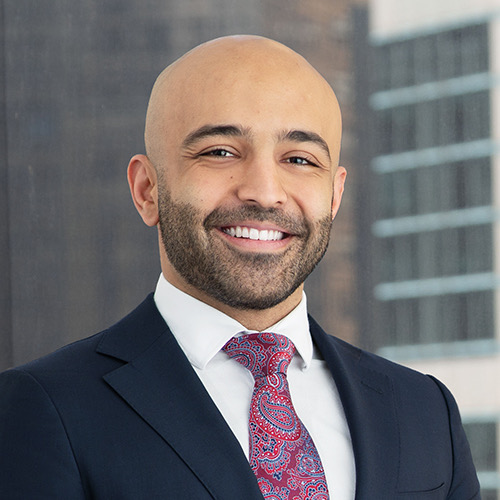
Amirali Oloomiyazdi, Esq.
Managing Attorney
Amirali Oloomiyazdi handles immigration matters personally. An Iranian-American attorney admitted in New York, New Jersey, and the District of Columbia, he provides counsel in both English and Farsi.
View Full BioFAQ
Frequently Asked Questions
Do I need a lawyer for my immigration case, or can I file it myself?
How long will my case take?
Can I work and travel while my application is pending?
What happens at the interview at 26 Federal Plaza?
What should I bring to my consultation?
How much does an immigration lawyer cost in New York?
What is the difference between adjustment of status and consular processing?
Can I get a green card if I am undocumented?
What happens if USCIS denies my immigration application?
How do I sponsor my spouse for a green card in New York?
Can I apply for citizenship if I have a criminal record?
Schedule a Consultation
If you're considering an immigration application, have received a Request for Evidence, face removal proceedings, or simply want to understand your options, contact Yazdi Law today. Our Midtown Manhattan office is at 261 Madison Avenue, Suite 1035, two blocks from Grand Central Terminal. Initial consultations are free. Representation available in English and Farsi.
The information on this page is for general informational purposes and does not constitute legal advice. Processing times reflect USCIS and court data and may change. Every case is unique; outcomes depend on specific facts and circumstances. Contacting Yazdi Law does not create an attorney-client relationship.