

Personal Injury Lawyers in New York City
Representing injured New Yorkers against negligent drivers, property owners, contractors, and insurers — from our Midtown Manhattan office to Supreme Court in all five boroughs.
Our Practice
Personal Injury Representation in Midtown Manhattan
Yazdi Law represents people injured in New York City accidents. Our clients include drivers, passengers, pedestrians, and cyclists hurt in motor vehicle collisions; workers injured on construction sites; tenants and visitors injured by negligent property conditions; and family members pursuing wrongful death claims after fatal accidents. Our office is at 261 Madison Avenue in Midtown Manhattan, and we litigate personal injury matters in New York County Supreme Court at 60 Centre Street, Kings County Supreme Court, Queens County Supreme Court, Bronx County Supreme Court, and across the federal and state courts of the metropolitan area.
We handle personal injury cases on a contingency fee basis under New York Judiciary Law § 474-a, meaning there is no fee unless we recover compensation for you. We advance all costs associated with investigating and pursuing your claim — accident reconstruction, medical record retrieval, expert consultations, deposition expenses, filing fees — and those costs are only repaid if the case produces a recovery. Clients owe nothing out of pocket during the pendency of the case.
If you have been injured in an accident, time is typically critical. New York's statute of limitations for personal injury actions is generally three years under CPLR § 214(5), and claims against municipal entities (including the City of New York, the MTA, and the New York City Transit Authority) carry much shorter deadlines — a Notice of Claim must be filed within 90 days under General Municipal Law § 50-e, and any lawsuit must be commenced within one year and 90 days. Evidence — surveillance footage, witness memories, accident scene conditions — degrades quickly. Call (917) 565-7286 for a free consultation, or request one online. We respond to personal injury inquiries the same day whenever possible.
Our Approach
How We Approach Personal Injury Cases
Personal injury cases turn on two things — liability (whether a defendant's negligence caused the injury) and damages (the full extent of the harm and its economic and non-economic consequences). Cases succeed or fail based on how thoroughly both are documented and presented. That is the standard we apply to every matter.
At the initial consultation, we want to understand what happened, how it happened, what injuries resulted, and what the medical and financial consequences have been to date. We ask about the accident itself, the immediate medical treatment, ongoing care, work missed, and how the injuries have affected daily life. We also review any no-fault paperwork, police reports, and correspondence from insurance adjusters — the early handling of these matters affects what is recoverable later.
Our practice is anchored in New York, and New York personal injury law has unique features that shape how cases must be prepared. The no-fault insurance framework under Insurance Law Article 51 governs virtually every motor vehicle accident. Under Insurance Law § 5104(a), an injured "covered person" generally cannot sue another covered person for pain and suffering unless the injury meets the "serious injury" threshold defined in Insurance Law § 5102(d) — nine enumerated categories including significant disfigurement, fracture, permanent loss of use of a body organ or member, significant limitation of use of a body function or system, and a "90/180-day" category for medically determined injuries that prevent substantially all usual activities for 90 of the first 180 days after the accident. The threshold analysis is document-intensive and requires objective medical evidence — MRIs, EMGs, treating physician reports in the proper format — as the Court of Appeals confirmed in Toure v. Avis Rent A Car Systems. Cases without proper medical documentation get dismissed regardless of how clearly the other driver was at fault.
Amirali Oloomiyazdi, Esq., the firm's managing attorney, handles personal injury matters personally. Clients communicate directly with the attorney responsible for their case. For clients who prefer Farsi-language representation, consultations and case discussions are conducted in Farsi. Cultural and language access can be particularly important in personal injury matters, where clients are often navigating medical treatment while also dealing with insurance companies that may try to exploit communication gaps.
Free Consultation
Injured in an accident? Discuss your case with an experienced New York personal injury attorney. No fee unless we recover.
Contact Us NowCase Types
Personal Injury Case Types We Handle in New York
Personal injury law covers a broad range of accident and injury types. Below is a walkthrough of the specific matters the firm handles, with the relevant New York statutory and procedural framework for each.
Motor Vehicle Accidents
Car, truck, motorcycle, rideshare, and pedestrian-versus-vehicle accidents are governed by a combination of common-law negligence principles and the no-fault framework of Insurance Law Article 51. No-fault coverage under Insurance Law § 5102 provides up to $50,000 in basic economic loss benefits to injured people in most vehicles, including payment of medical bills, 80% of lost wages up to $2,000 per month for three years, and other reasonable expenses. Pursuing a third-party lawsuit against the at-fault driver for pain and suffering requires meeting the serious injury threshold under § 5102(d). No-fault benefits must be applied for within 30 days of the accident to preserve eligibility. Motorcycle accidents are a notable exception — motorcyclists are not covered by no-fault and can pursue claims without meeting the threshold.
More on car accident claimsConstruction Accidents
New York provides some of the strongest worker protections in the country through Labor Law §§ 200, 240(1), and 241(6). Section 240(1) — known as the "Scaffold Law" — imposes strict liability on owners and general contractors for elevation-related accidents, including falls from scaffolds and ladders and injuries from falling objects. Section 241(6) imposes liability for violations of specific safety regulations under the Industrial Code (12 NYCRR Part 23). Section 200 codifies common-law negligence duties to maintain a safe workplace. Workers injured on the job typically have both a Workers' Compensation claim under Workers' Compensation Law § 10 and a potential third-party lawsuit against property owners, general contractors, and other non-employer entities.
More on construction accident claimsSlip and Fall / Premises Liability
Property owners and occupiers have a duty under New York common law to maintain premises in a reasonably safe condition and to warn of known hazards. Slip-and-fall cases require proof that the property owner created the dangerous condition, had actual notice of it, or had constructive notice (that the condition existed long enough that it should have been discovered and remedied). Weather-related claims involve the "storm in progress" doctrine, which generally suspends the duty to clear snow or ice while precipitation is ongoing. Sidewalk cases in New York City implicate Administrative Code § 7-210, which shifts liability for sidewalk maintenance from the City to adjacent property owners in most cases.
More on slip and fall claimsMedical Malpractice
Claims against physicians, hospitals, and other healthcare providers for negligent medical care are subject to a shortened statute of limitations of two years and six months under CPLR § 214-a. These cases require proof of a deviation from the accepted standard of care and require expert medical testimony from qualified providers. Certain tolling provisions apply for continuous treatment, foreign objects left in the body, and minors' claims.
Wrongful Death
When a death results from another party's negligence, the decedent's statutory distributees — typically the surviving spouse, children, or parents — may pursue a wrongful death claim under EPTL § 5-4.1. These claims have a two-year statute of limitations running from the date of death, which is separate from the three-year personal injury deadline under CPLR § 214(5). Recovery is limited to pecuniary losses — the economic value of the deceased's anticipated contributions to the distributees — but New York law permits recovery for pre-death pain and suffering through a separate survival action under EPTL § 11-3.2.
Claims Against Governmental Entities
Cases against the City of New York, the MTA, the Transit Authority, the New York City Housing Authority, and other public entities require a Notice of Claim filed within 90 days of the accident under General Municipal Law § 50-e, a statutory hearing under § 50-h if requested by the entity, and commencement of any lawsuit within one year and 90 days. These timelines are strict and missing them generally bars the claim entirely, regardless of the underlying merits.
Other Matters
The firm also handles bicycle accidents, pedestrian accidents, dog bite cases under New York's hybrid common-law and statutory framework, product liability claims, and nursing home negligence matters. These cases arise across all five boroughs — bicycle accidents frequently occur along Manhattan's protected bike lanes and across the Brooklyn and Williamsburg Bridges, and nursing home negligence claims involve facilities throughout Queens, Brooklyn, and the Bronx.
The Process
The Personal Injury Case Process in New York
The process begins with a free consultation — in person at our Madison Avenue office, by phone, or by video. Bring whatever you have: the police report if one was prepared, photographs of the scene or injuries, names and contact information of witnesses, correspondence from insurance companies, and medical records or bills you have received. Don't delay the call to gather every document. The most important thing is starting the legal clock, preserving evidence, and beginning the no-fault application process if one is required.
At the consultation, we discuss the accident, the injuries, the medical treatment so far and what is anticipated, the insurance situation, and any statutory deadlines — particularly if the claim involves a municipal entity and the 90-day Notice of Claim deadline is approaching. We provide an honest assessment of liability, damages, and the realistic range of outcomes. If we accept the case, we provide a written retainer agreement consistent with 22 NYCRR § 1215.1 and the contingency fee rules.
After retention, we take over the handling of the case. We notify all relevant insurance carriers, preserve evidence, obtain the police report and any available surveillance, order medical records, and handle communications with adjusters — clients should not be communicating directly with insurance companies once represented. For no-fault cases, we ensure the application is filed timely and benefits flow correctly. We then pursue settlement with the at-fault party's liability insurer; if a fair settlement is not offered, we commence suit in the appropriate Supreme Court.
Timelines vary with case complexity. Straightforward cases with clear liability and well-documented injuries often settle in 12 to 24 months. Cases that go to suit and require depositions, independent medical examinations, and motion practice generally take 24 to 48 months. Construction and medical malpractice cases are often longer due to the depth of expert discovery involved. We communicate realistic expectations at the consultation and update you at each significant milestone.
Our Advantage
Why Clients Choose Yazdi Law
-
Direct Attorney Representation
Every client works directly with an attorney. Amirali Oloomiyazdi, Esq. handles cases personally — from the initial consultation through discovery, negotiations, and trial if necessary. In personal injury matters, where case value depends heavily on how thoroughly injuries are documented and how skillfully the settlement demand is presented, attorney attention to detail matters in concrete dollar terms.
-
Midtown Manhattan Accessibility
The firm's Midtown Manhattan location provides convenient access for clients across the five boroughs. The office is two blocks from Grand Central Terminal, with direct subway access from Queens, Brooklyn, the Bronx, and Manhattan. For clients recovering from serious injuries, we also offer phone and video consultations and make arrangements for meetings at locations convenient to the client when circumstances require.
-
Bilingual Counsel (English & Farsi)
In personal injury cases — where clients are often dealing with medical providers, insurance adjusters, and benefits paperwork simultaneously — language access affects outcomes. Adjusters sometimes take advantage of perceived language barriers to minimize settlements. Representation in Farsi eliminates that dynamic.
-
Full-Service Firm
For clients whose personal injury case has related legal dimensions — a disability that affects a pending immigration matter, a car accident that raises questions about a lease or housing situation, a divorce affecting the allocation of settlement proceeds — the firm can address the full picture rather than coordinating across multiple offices.
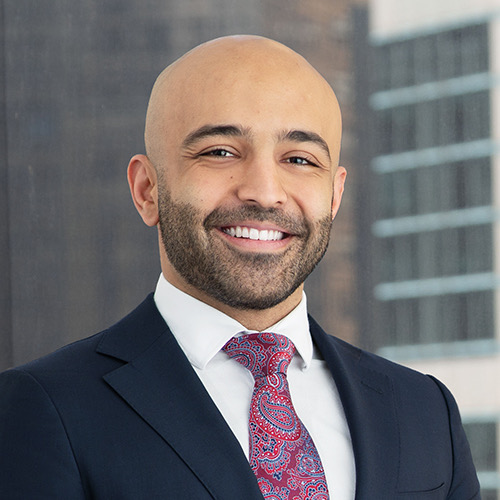
Amirali Oloomiyazdi, Esq.
Managing Attorney
Amirali Oloomiyazdi handles personal injury matters personally — from initial consultation through settlement or trial. An attorney admitted in New York, New Jersey, and the District of Columbia, he provides counsel in both English and Farsi.
View Full BioFAQ
Frequently Asked Questions
How much does it cost to hire Yazdi Law for a personal injury case?
What is the deadline to file a personal injury case in New York?
Do I have to meet the ‘serious injury’ threshold to sue after a car accident?
What happens with my medical bills after an accident?
How long does a personal injury case take to resolve?
Can I sue if I was partially at fault for my accident in New York?
What damages can I recover in a New York personal injury lawsuit?
Should I talk to the other driver’s insurance company after an accident?
What should I do immediately after a car accident in New York City?
Can I file a personal injury claim if I was hit by a car while walking in NYC?
Schedule a Consultation
If you or a family member has been injured in a New York accident, call Yazdi Law at (917) 565-7286 or request a consultation online. Our Midtown Manhattan office is at 261 Madison Avenue, Suite 1035, two blocks from Grand Central Terminal. Initial consultations are free. Personal injury matters are handled on a contingency basis — no fee unless we recover. Representation is available in English and Farsi.
Disclaimer: The information on this page is for general informational purposes and does not constitute legal advice. Statutory citations, court procedures, and deadlines reflect New York law as of the date of publication and may change. Every case is unique; prior results do not guarantee a similar outcome; and outcomes depend on specific facts and circumstances. Contacting Yazdi Law does not create an attorney-client relationship. Attorney Advertising.