Every marriage-based green card case rests on a single question: is this marriage real? U.S. immigration law requires the couple to prove the marriage is bona fide — entered to build a life together, not to obtain a green card. For most couples, assembling that proof is straightforward. For Iranian and Persian couples, it is frequently anything but.
The reason is not that Iranian marriages are viewed with more suspicion — it is that the ordinary shape of an Iranian-American relationship often fails to match the template USCIS officers see every day. The wedding happened in Istanbul or Dubai because family in Iran could not get American visas. The courtship was introduced through families and conducted across an eleven-and-a-half-hour time difference. The marriage contract contains a mahr (mehrieh) stated in gold coins. Some finances are held with parents rather than between spouses. None of this makes a marriage less genuine — but each item, unexplained, can read as a red flag to an officer who has never seen an aghd-nameh.
This guide explains how Iranian couples build a bona fide marriage case that officers understand: what evidence carries the most weight, how to present the cultural context before it gets misread, and how to prepare for the interviews — including New York’s notorious Stokes interview — where these cases are won.
The Legal Standard: What USCIS Must Believe
The petitioning couple bears the burden of proving the marriage was bona fide at its inception — that when you married, you intended a shared life. USCIS evaluates the totality of the circumstances: cohabitation, commingled finances, how the couple presents to family and community, consistency of the couple’s accounts, and the documentary trail a genuinely shared life produces.
The stakes are asymmetrical. A finding of marriage fraud under INA § 204(c) permanently bars approval of any future visa petition for the foreign spouse — the harshest recurring penalty in family immigration. That is not a reason for genuine couples to fear the process; it is a reason to treat the evidence package as the centerpiece of the case rather than an afterthought stapled to the I-130 petition.
The Evidence Hierarchy: What Actually Persuades Officers
Not all evidence weighs the same. Experienced practitioners think of bona fides in tiers:
Tier One: Financial Interdependence and Cohabitation
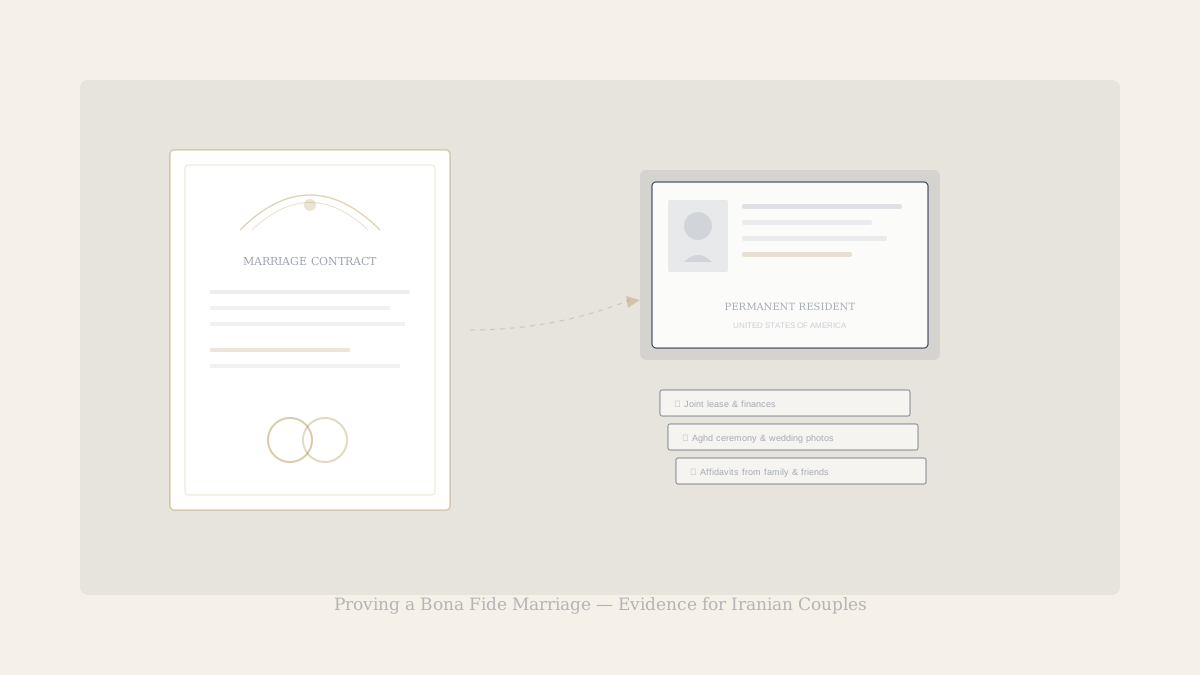
- Joint lease or deed with both names — the backbone document
- Joint bank accounts with real activity — regular deposits and shared spending, not a dormant account opened the week before filing
- Joint federal and state tax returns
- Health, auto, and renter’s insurance covering both spouses
- Beneficiary designations — retirement accounts and life insurance naming the spouse
Tier Two: The Life You Actually Live
- Photographs across the full relationship timeline — engagement (namzadi), the aghd ceremony, holidays like Nowruz with both families, ordinary life in between. Fifty photos from one wedding day are weaker than twenty photos spanning three years
- Travel together — boarding passes, hotel records, passport stamps
- Communication records for long-distance periods — call logs and representative message threads
- Affidavits from parents, siblings, and friends describing specific observations, in their own words — not notarized form letters
Tier Three: Supporting Color
Wedding invitations and contracts, gift receipts, joint memberships, mail addressed to both spouses at the same address, religious or community records. Useful in volume, never sufficient alone.
The package should be front-loaded — filed with the petition, organized with an index, covering the entire relationship period. A thin filing invites a Request for Evidence; a disorganized one invites a Stokes referral.
The Iranian-Specific Issues — and How to Present Them
The Aghd-Nameh and Civil Registration
An Iranian marriage registered with the civil registry is fully valid for U.S. immigration, proven by the marriage document with a certified English translation. Two recurring complications deserve attention before filing. First, authentication: Iran is not a Hague Apostille country and has no U.S. embassy, so Iranian civil documents — the marriage registration, the shenasnameh — follow Iran-specific authentication channels that take time. Second, the religious-only ceremony: an aghd performed without civil registration raises questions about the marriage’s legal validity that must be resolved — sometimes by registering or remarrying civilly — before the petition is filed, not after USCIS notices.
The Mahr Is Not a Red Flag — Unexplained, It Can Look Like One
Virtually every Iranian marriage contract states a mahr. Officers familiar with Iranian cases understand it as the customary element it is; USCIS does not treat a mahr as evidence of a transactional marriage. The risk arises only when an unfamiliar adjudicator encounters an untranslated contract promising hundreds of gold coins with no context. The fix costs one paragraph: a proper translation and a short explanation of the custom in the filing’s cover letter. (The mahr does matter in a different arena — New York divorce proceedings — which is why couples with significant assets often coordinate the marriage contract with a prenuptial agreement.)
Third-Country Weddings and Family-Bridged Courtships
A wedding in Istanbul, Dubai, or Yerevan; a courtship that began with a family introduction (khastegari); years of relationship conducted over video calls punctuated by visits — these are the normal geometry of Iranian-American relationships under four decades of visa restrictions. Presented without explanation, they pattern-match to fraud indicators: brief in-person contact, families absent from the wedding, marriage shortly after meeting. Presented with explanation — visa denial notices for relatives, the communication record, an affidavit from the family members who made the introduction — they become what they are: evidence of a couple that built a real relationship despite real obstacles.
Separate and Family-Held Finances
In many Persian households, significant assets sit with parents, and new couples keep some accounts separate. Officers who expect full commingling can misread this. The answer is substitution and candor: maximize the joint documentation that does exist, and include a brief statement explaining the family financial structure. What damages cases is not the structure itself but the appearance of concealment.
The Interviews: Where the Case Is Decided
The Standard Interview
Most couples interview together at the local field office. Preparation means reviewing your own life: dates, addresses, how you met, the ceremony, daily routines. Our guide to what happens at a USCIS marriage green card interview covers the mechanics. For Farsi-dominant spouses, interpreter arrangements deserve advance planning — a mistranslated answer can create an “inconsistency” that never existed.
The Stokes Interview: New York's Specialty
When doubts arise, New York City cases are referred to a Stokes interview — spouses separated and asked matched questions, answers compared line by line: Who woke first this morning? What color is the bathroom? What did you do last Saturday? The NYC district uses Stokes procedures more than nearly any other, and Iranian couples with third-country weddings or long-distance histories are overrepresented in referrals.
Two truths about Stokes interviews: they are winnable, and they are unforgiving of poor preparation. Couples should attend with counsel — attorneys may be present and the proceedings are recorded — and prepare by living attentively, not by memorizing scripts, which officers detect and hold against credibility. Honest “I don’t remember” answers beat confident guesses that conflict with a spouse’s answer.
After Approval: The Two-Year Horizon
Couples married less than two years at approval receive conditional residence — and the bona fides question returns in the I-751 removal of conditions petition, which requires evidence from the two years after the green card. The habit to build now: keep accumulating joint documents continuously. Couples who stop papering their shared life after approval create their own I-751 problem. And for spouses abroad, the same evidence principles govern the consular track through Abu Dhabi, Ankara, or Yerevan — covered in our companion guide to marriage green cards for Iranian-American couples.
Work With a Farsi-Speaking Marriage Green Card Attorney in NYC
The difference between a routine approval and a Stokes referral is usually not the marriage — it is the presentation. As an Iranian-American immigration attorney, Amirali Oloomiyazdi has assembled bona fide marriage cases for Persian couples that anticipate exactly these issues: aghd documentation and authentication, mahr context, third-country wedding narratives, family-held finances, and Stokes preparation conducted in Farsi and English — وکیل مهاجرت ایرانی در نیویورک.
From our office at 261 Madison Avenue in Midtown Manhattan, Yazdi Law handles marriage-based green cards, I-130 petitions, I-751 removal of conditions, and consular processing for spouses in Iran — serving the Persian community across New York City, Long Island, and Great Neck and Nassau County.
Call (917) 565-7286 for a free consultation in Farsi or English, or use the form below. The best time to build your evidence is before you file.