
Iranian & Farsi-Speaking Attorney Serving Nassau County and Great Neck — وکیل ایرانی نساو کانتی
Yazdi Law serves the Iranian-American community across Nassau County and Long Island’s North Shore — Great Neck, Roslyn, Manhasset, Port Washington, Kings Point, Sands Point, Jericho, Syosset — from the firm’s Midtown Manhattan office at 261 Madison Avenue. The office is a short LIRR ride from Great Neck and Manhasset stations on the Port Washington Branch.
Amirali Oloomiyazdi, Esq. is an Iranian-American attorney admitted in New York who conducts consultations, document review, and case updates directly in Farsi. The firm’s practice for Nassau County clients centers on divorce and family law, immigration, and real estate.
ما به زبان فارسی خدمات حقوقی ارائه میدهیم — برای مشاوره رایگان با ما تماس بگیرید.
We provide legal services in Farsi — contact us for a free consultation.
Our Community
Great Neck and Nassau County’s Persian Community
Great Neck is home to one of the largest and most established Iranian-American communities in the United States. The community is concentrated across the Great Neck villages — Great Neck, Great Neck Estates, Great Neck Plaza, Kings Point, Kensington, Thomaston, Saddle Rock, and Russell Gardens — and extends through neighboring Manhasset, Roslyn, Port Washington, and Sands Point on Long Island’s North Shore. Families have lived in this area for decades, and the community’s presence is visible in the Persian businesses, cultural organizations, restaurants, and gathering places that are part of daily life in Great Neck.
The community’s roots in Great Neck reflect several generations of Iranian families drawn to the area by the highly regarded Great Neck public school district, the relative proximity to Manhattan via the LIRR Port Washington Branch, and the ability to raise children within a familiar cultural environment. The result is a self-sustaining community where families can maintain their language, traditions, and connections to Persian culture while building lives in the United States.
For families in this community, legal matters often involve Iranian documentation norms, family structures, and cultural expectations that a general-practice attorney may not be familiar with. An Iranian marriage contract (عقدنامه) is structurally different from an American prenuptial agreement. A شناسنامه (identity booklet) follows a format that is unfamiliar to most American attorneys and court clerks. Family financial arrangements — including multi-generational property ownership and informal lending between relatives — are common in the Persian community but require specific documentation to satisfy American courts and lenders. Working with counsel who understands these norms without explanation saves time, reduces the risk of misunderstanding, and produces better outcomes.
Family Law
Divorce and Family Law for Nassau County Clients
Where Nassau County Divorce Cases Are Filed
Divorce actions for Nassau County residents are filed in Nassau County Supreme Court, located at 100 Supreme Court Drive in Mineola. All contested and uncontested divorces, equitable distribution claims, and ancillary matrimonial relief are heard in Supreme Court. Custody, child support, spousal support enforcement, and family offense (orders of protection) matters are heard in Nassau County Family Court at 1200 Old Country Road in Westbury.
Nassau County Supreme Court operates differently from New York County (Manhattan) Supreme Court in several practical respects. The assignment of cases to specific judicial parts, the local rules governing disclosure and motion practice, the scheduling of conferences, and the availability of court-annexed mediation programs all differ between counties. Yazdi Law files and appears in Nassau County courts regularly and is familiar with the procedural expectations and local practices that affect case management and timing. For an overview of how divorce timelines work across New York, see our post on how long divorce takes in New York.
Divorce Issues That Recur in Iranian-American Families
Mahr / mehrieh (مهریه): The mahr provision in the Iranian marriage contract is one of the most frequently litigated issues when an Iranian-American couple divorces in New York. New York courts have addressed mahr in several reported decisions, but the analysis varies depending on whether the court treats the obligation as a prenuptial agreement subject to DRL § 236(B), a religious obligation, or a contractual commitment enforceable on its own terms. The enforceability of mahr depends on the specific language of the contract, the circumstances of the marriage, and the equitable distribution analysis in the case. This issue is covered in detail in our dedicated post on mahr and mehrieh in New York divorce.
Marriages performed in Iran: New York generally recognizes marriages performed in foreign countries if they were valid under the law of the jurisdiction where performed. However, documenting an Iranian marriage for a New York divorce proceeding presents practical challenges. The marriage certificate must be authenticated — a process complicated by the absence of a U.S. embassy in Iran and Iran’s non-participation in the Hague Apostille Convention. Certified English translations are required for all documents filed with the court.
Assets and property located abroad: Equitable distribution in New York applies to all marital property regardless of where it is located, including real estate, bank accounts, and business interests in Iran or other countries. Identifying, valuing, and dividing foreign assets presents challenges — particularly where the assets are in a jurisdiction with limited financial transparency or where the other spouse controls access to documentation. Sanctions-related restrictions on financial transactions involving Iran add further complexity.
Divorce intersecting with immigration: When a client’s immigration status depends on the marriage, the divorce and immigration cases must be coordinated carefully. A spouse with conditional permanent residence based on a marriage less than two years old may need to file an I-751 waiver with a divorce waiver rather than a joint petition. A spouse who experienced domestic violence may qualify for protection under VAWA (the Violence Against Women Act), which provides an independent path to permanent residence. The timing of the divorce filing relative to the immigration filing is critical in both scenarios.
Cultural and family-privacy considerations: Divorce carries particular weight in many Iranian-American families, and clients often have strong preferences about how the matter is handled — including a preference for uncontested divorce where possible, concern about the visibility of court filings, and the involvement of extended family in settlement discussions. These considerations are not legal issues, but they affect how the case is managed, and an attorney who understands them can better serve the client’s overall interests. The firm also handles contested divorces, custody and parenting time, and prenuptial and postnuptial agreements for Nassau County clients.
Immigration
Immigration Services for Nassau County’s Iranian Community
Yazdi Law handles the full range of immigration matters for Iranian families on Long Island: family-based petitions (I-130), marriage-based green cards, naturalization and citizenship applications (N-400), asylum and humanitarian protection claims, and employment-based visa petitions including H-1B, O-1, and EB categories. All consultations, document preparation, and case communication are available in Farsi.
Nassau County residents whose immigration cases require a USCIS interview are typically scheduled at the USCIS field office serving their area of residence rather than the Manhattan field office at 26 Federal Plaza. Yazdi Law prepares clients for interviews regardless of which USCIS office the case is assigned to and accompanies clients to the interview when representation is appropriate.
For a full discussion of the immigration issues that are particular to Iranian nationals — third-country consular processing at U.S. embassies in Abu Dhabi, Ankara, and Yerevan; OFAC sanctions considerations and financial documentation challenges; 221(g) administrative processing delays; and authenticating Iranian civil documents for USCIS submission — see our Iranian immigration attorney page.
We Can Help With
- Divorce & family law (Nassau County courts)
- Mahr / mehrieh disputes in divorce
- Family-based green cards & I-130 petitions
- Marriage-based immigration
- Naturalization & U.S. citizenship
- Asylum & humanitarian protection
- Residential real estate closings
Real Estate
Real Estate for Nassau County Buyers and Sellers
Great Neck and the surrounding North Shore communities have an active residential real estate market, with a significant share of transactions involving Persian-American families who are buying, selling, or transferring property within the community. Yazdi Law handles residential closings for Nassau County buyers and sellers, including contract review and negotiation, title and due diligence, and closing representation. Bilingual Farsi representation ensures that contract terms, financing conditions, and closing documents are understood clearly — particularly important in a transaction where the earnest money deposit alone is typically 10% of the purchase price.
Nassau County’s tax and recording structure differs from New York City in ways that affect closing costs. The NYC Real Property Transfer Tax (RPTT) does not apply in Nassau County, which can save sellers tens of thousands of dollars compared to a sale at the same price in the five boroughs. The NY State transfer tax (0.4%) and mansion tax on purchases of $1 million or more apply statewide, including in Nassau. Recording of deeds and mortgages is handled through the Nassau County Clerk’s office rather than NYC’s ACRIS system. Property taxes in Nassau County are assessed at the county level, with school district taxes typically representing the largest component. The assessment grievance process through the Nassau County Assessment Review Commission (ARC) is a routine part of property ownership.
For more on the firm’s real estate practice, including residential closings, landlord-tenant matters, and commercial transactions, see the real estate practice page.
How It Works
Working With a Manhattan Firm From Long Island
Yazdi Law is located at 261 Madison Avenue, Suite 1035, in Midtown Manhattan, steps from Grand Central Terminal. Great Neck station is on the LIRR Port Washington Branch, with direct service to Penn Station — a commute of approximately 35 minutes. Manhasset station is one stop closer. For clients who prefer not to travel, phone and video consultations are available for all practice areas, and most matters — including document review, case strategy discussions, and routine case updates — are handled without requiring an in-person visit.
When a matter requires a court appearance in Nassau County, the firm files and appears in Nassau County Supreme Court in Mineola and Nassau County Family Court in Westbury directly. The client does not need to travel to Manhattan for court appearances that take place in Nassau County. For immigration interviews, the firm accompanies clients to whichever USCIS field office is assigned to the case. For real estate closings, the firm arranges representation at a location convenient to the transaction, which may include a title company office in Nassau County.
The practical reality is that a Manhattan-based firm with regular Nassau County practice gives clients access to the full resources of a Midtown Manhattan office while appearing locally where the case requires it. This is a common arrangement in the New York metropolitan area, where attorneys routinely practice across county lines.
Service Area
Areas We Serve on Long Island
Yazdi Law represents clients in Great Neck, Great Neck Estates, Kings Point, Sands Point, Manhasset, Port Washington, Roslyn, Roslyn Heights, Jericho, Syosset, Woodbury, Old Westbury, Garden City, Mineola, Westbury, Hicksville, and surrounding Nassau County communities. The firm also serves clients in Suffolk County, Westchester County, and all five New York City boroughs. For immigration matters, the firm represents clients nationwide.
Your Attorney
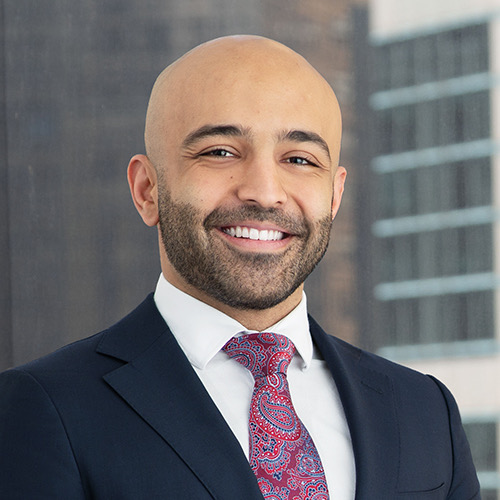
Your Attorney: Amirali Oloomiyazdi
Amirali Oloomiyazdi is the managing attorney of Yazdi Law, PLLC, and an Iranian-American attorney admitted to the New York Bar. He earned his J.D. from Benjamin N. Cardozo School of Law and holds admissions in New York, New Jersey, and the District of Columbia. His practice covers divorce and family law, immigration, real estate, and personal injury — with a significant portion of his caseload drawn from the Persian community in New York City and on Long Island.
Mr. Oloomiyazdi conducts all client communications — consultations, document review, negotiation, and court preparation — in both Farsi and English. For Nassau County clients, this means working with an attorney who understands Iranian documentation, family norms, and cultural context without needing explanation, while also providing full representation in Nassau County’s courts and across all New York jurisdictions.
Schedule a Free Consultation — به زبان فارسی یا انگلیسی
Whether you need a Farsi-speaking divorce attorney for a Nassau County case, immigration counsel for a family petition, or a real estate lawyer for a Great Neck closing, Yazdi Law is here to help. Call (917) 565-7286 to speak with an attorney in Farsi or English, or fill out the form and we will contact you within 24 hours.
Midtown Manhattan, steps from Grand Central Terminal
FAQ
Frequently Asked Questions — سوالات متداول
Do you have an office in Great Neck or Nassau County?
Can I have my consultation in Farsi?
Where would my Nassau County divorce case be filed?
How are mahr (مهریه) obligations treated in a New York divorce?
Do I have to travel to Manhattan for my case?
Can you handle both my divorce and my immigration case?
Do you serve Suffolk County and Westchester as well?
How much does an initial consultation cost?
Protect Your Rights. We Speak Your Language.
Call today for a free consultation in Farsi or English. Yazdi Law represents Nassau County and Long Island families in divorce, immigration, and real estate matters from our Manhattan office.