
Punjabi-Speaking Immigration Attorney in New York City
Yazdi Law, PLLC is a New York City law firm with a Punjabi-speaking immigration attorney on staff. Rajan Kambo, Esq., Of Counsel, conducts immigration consultations, document review, and case updates directly in Punjabi — not through an interpreter. From our offices at 261 Madison Avenue in Midtown Manhattan, we represent members of the Punjabi community across the full range of immigration matters: family-based petitions, marriage green cards, naturalization, asylum, Special Immigrant Juvenile Status, Temporary Protected Status, and employment-based visas.
We serve clients from both Indian Punjab and Pakistani Punjab and understand that "Punjabi" is not one undifferentiated group. The documents, civil registries, naming conventions, marriage registration systems, and consular processing paths differ between India and Pakistan. An immigration attorney who understands these differences prepares stronger cases and avoids the errors that come from treating all South Asian documentation as interchangeable.
We provide legal services in Punjabi — contact us for a free consultation.
Language Access
Immigration Counsel in Punjabi
Rajan Kambo, Esq. is Of Counsel at Yazdi Law, where he leads the firm’s immigration practice. He conducts consultations, document reviews, case strategy discussions, and interview preparation directly in Punjabi. This is not a courtesy translation — it is how the work is done when working with Punjabi-speaking clients. There is no interpreter involved, no risk of mistranslation in a high-stakes legal proceeding, and no need for clients to accept approximate understanding of their own case.
Language access changes case quality in concrete ways. When a USCIS officer issues a Request for Evidence, the client needs to understand precisely what additional documentation is being requested and why — not a simplified summary. When preparing for a naturalization interview or an asylum hearing, the client needs to be able to discuss sensitive personal history in the language they think in, not through a filter. When evidence needs to be developed — affidavits from family members, explanations of name discrepancies, descriptions of persecution — an attorney who speaks the client’s language can capture details that would be lost or flattened in translation.
Rajan earned his J.D. from the Benjamin N. Cardozo School of Law at Yeshiva University and a B.S. in Economics from the State University of New York at Albany. He is admitted to practice in New York and New Jersey, as well as before the United States Court of Appeals for the Second Circuit and the United States Court of International Trade.
Our Community
Serving Punjabi Communities Across the New York Metro Area
The New York metropolitan area is home to one of the largest Punjabi populations in the United States. In Queens, the neighborhoods of Richmond Hill, South Ozone Park, Ozone Park, and Jackson Heights are centers of Punjabi life — with gurdwaras, Punjabi businesses, and community organizations that have anchored these neighborhoods for decades. Further east in Queens, Bellerose and Queens Village have growing Punjabi populations. On Long Island, Hicksville and surrounding communities in Nassau County are home to a significant Sikh Punjabi community. In the Bronx and in communities across New Jersey, Punjabi families continue to settle and build lives.
Yazdi Law serves clients from both Indian Punjab and Pakistani Punjab. These communities share a language but differ in important ways that affect immigration cases. An Indian Punjabi client will present a birth certificate issued by a municipal corporation or panchayat office, a marriage certificate registered under the Hindu Marriage Act or the Anand Marriage Act, and an Indian passport issued by the Ministry of External Affairs. A Pakistani Punjabi client will present a NADRA-issued Computerized National Identity Card, a nikah nama, and a Pakistani passport. The document formats, civil registry systems, authentication procedures, and consular processing paths are distinct. An immigration attorney who conflates the two creates unnecessary complications.
Beyond immigration, Yazdi Law also handles personal injury, divorce and family law, and real estate matters in English and Farsi through the firm’s other attorneys.
Documentation
Documentation Issues That Recur in Punjabi Immigration Cases
Singh and Kaur Name Conventions and USCIS Records
Many Sikh applicants carry Singh (for men) or Kaur (for women) as a religious name, a middle name, or the sole surname. The result is that an individual’s name may appear differently across their Indian passport, birth certificate, school leaving certificate, and any prior U.S. immigration filings. One document may list "Harpreet Singh Gill," another "Harpreet Singh," and a third "Harpreet Gill." USCIS adjudicators flag these discrepancies as potential identity issues, often issuing Requests for Evidence that can delay a case by months.
Yazdi Law addresses name-mismatch issues proactively. We prepare a documented explanation of the Sikh naming convention, supported by affidavits from family members and secondary evidence establishing identity continuity across documents. When we file a petition or application for a client whose documents show name variations, we include this explanation upfront rather than waiting for an RFE.
Birth Records from Rural Punjab
Birth registration has historically been inconsistent in rural areas of both Indian and Pakistani Punjab. Many individuals — particularly those born at home in villages rather than in hospitals — were never registered at birth. When a birth certificate is unavailable, the applicant must first obtain a written statement from the relevant civil registrar confirming that no birth record exists, then assemble secondary evidence that USCIS will accept as proof of birth. This process is governed by the USCIS Policy Manual, Volume 1, Part E, Chapter 6.
Acceptable secondary evidence typically includes a school leaving certificate or matriculation certificate showing the applicant’s date and place of birth, hospital or clinic records, religious records, census records, and affidavits from individuals with personal knowledge of the birth — typically parents, older relatives, or the birth attendant. Yazdi Law helps clients identify and assemble the combination of secondary documents that will satisfy the adjudicator.
Marriage Documentation
For Indian Punjabi clients, the type of marriage documentation depends on how the marriage was performed and registered. A Sikh marriage ceremony (Anand Karaj) performed at a gurdwara may be registered under the Anand Marriage Act, 1909, as amended in 2012 to provide for compulsory registration, or under the Hindu Marriage Act, 1955. Before the 2012 amendment, Sikh marriages were registered under the Hindu Marriage Act; the Anand Marriage (Amendment) Act, 2012, inserted Section 6 to allow registration under the Anand Marriage Act itself. The registration certificate format and issuing authority differ depending on which act governs the registration. Some couples have a gurdwara-issued certificate from the marriage ceremony but no civil registration — which can complicate the evidentiary record for an I-130 petition or marriage-based green card.
For Pakistani Punjabi clients, the primary marriage document is the nikah nama, and NADRA (the National Database and Registration Authority) issues a Family Registration Certificate that lists all family members under one head of family with their CNIC numbers and can serve as additional evidence of the marital and family relationship. Yazdi Law is familiar with both documentation systems and prepares marriage-based immigration cases with the supporting evidence appropriate to the client’s country of origin.
Certified Translations
Under 8 CFR § 103.2(b)(3), any document containing foreign language submitted to USCIS must be accompanied by a full English language translation. The translator must certify that the translation is complete and accurate, and that they are competent to translate from the foreign language into English. This applies to all Punjabi-language documents — whether in Gurmukhi script (used in Indian Punjab) or Shahmukhi script (used in Pakistani Punjab) — as well as Hindi and Urdu documents that may be part of the evidentiary record.
Yazdi Law guides clients through the translation and certification process and reviews completed translations for accuracy and completeness before filing.
Our Services
Immigration Matters We Handle
Yazdi Law represents Punjabi-speaking clients across the full spectrum of U.S. immigration law. Rajan Kambo handles each of these matter types with consultations and case management available in Punjabi:
- •Family-based petitions (I-130): Sponsoring spouses, parents, children, and siblings for lawful permanent residence. Learn more about I-130 petitions.
- •Marriage-based green cards: Complete representation from I-130 filing through adjustment of status or consular processing, including interview preparation. Learn more about marriage-based green cards.
- •Naturalization (N-400): Citizenship applications, civics and English test preparation, and representation at the USCIS interview. Learn more about naturalization.
- •Asylum and humanitarian protection: Affirmative applications with USCIS and defensive applications in removal proceedings for individuals facing persecution. Learn more about asylum.
- •Temporary Protected Status: TPS applications and re-registrations for nationals of designated countries. Learn more about TPS, DACA, and VAWA.
- •Special Immigrant Juvenile Status: Representing children who have been abused, neglected, or abandoned, through both the New York Family Court predicate order and the I-360 petition with USCIS. Under INA § 101(a)(27)(J), the applicant must be under 21, unmarried, and present in the United States at the time of filing.
- •Employment-based visas: H-1B specialty occupation visas, O-1 extraordinary ability visas, and EB-category immigrant visas. Learn more about H-1B visas.
- •Deportation defense: Representation in removal proceedings before the immigration courts, applications for relief from removal, and appeals to the Board of Immigration Appeals and the Second Circuit. Learn more about deportation defense.
We Can Help With
- Family-based green cards & I-130 petitions
- Marriage-based immigration
- Naturalization & U.S. citizenship
- Asylum & humanitarian protection
- Special Immigrant Juvenile Status
- TPS, DACA & VAWA
- H-1B, O-1 & employment visas
- Deportation defense & removal proceedings
Consular Processing
Consular Processing for Applicants in India and Pakistan
When a family member or spouse is abroad and cannot adjust status inside the United States, the immigration process requires consular processing — the beneficiary attends an immigrant visa interview at a U.S. embassy or consulate in their home country. The specific posts that handle immigrant visa interviews differ between India and Pakistan.
In India, immigrant visa interviews are conducted at U.S. consular posts including the U.S. Embassy in New Delhi and the U.S. Consulates General in Mumbai, Chennai, Hyderabad, and Kolkata. The National Visa Center assigns the interview location, typically based on the beneficiary’s place of residence. Each post has its own scheduling pace and document submission requirements.
In Pakistan, immigrant visa interviews are conducted at the U.S. Embassy in Islamabad. Processing timelines for Pakistani nationals may include additional administrative processing — often referenced by the code 221(g) — which involves enhanced background checks and interagency review. These delays can add weeks to months beyond standard processing times, and Yazdi Law factors this reality into case planning from the outset.
Yazdi Law prepares clients and their family members for consular interviews, including document checklists tailored to the specific post, guidance on what to expect during the interview, and strategies for addressing potential issues such as prior visa denials, unlawful presence, or gaps in documentation.
Your Attorney
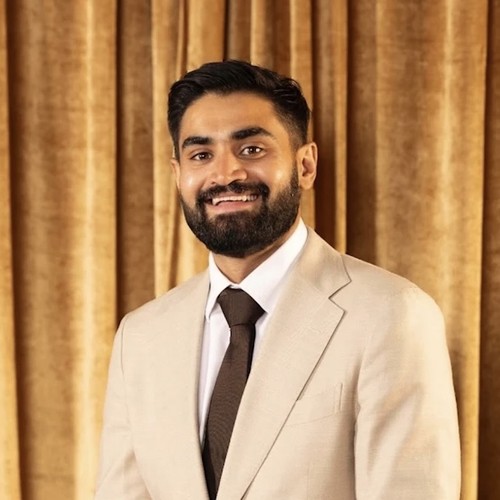
Working With Rajan Kambo
Rajan Kambo is Of Counsel at Yazdi Law, PLLC, where he leads the firm’s immigration practice from the Midtown Manhattan office at 261 Madison Avenue. He represents individuals and families across the full spectrum of immigration matters — from initial petitions and applications through consular processing, removal defense, and federal appellate review.
Rajan is admitted to practice in New York, New Jersey, the United States Court of Appeals for the Second Circuit, and the United States Court of International Trade. His Second Circuit admission allows him to pursue federal appellate review of immigration court and Board of Immigration Appeals decisions. He earned his J.D. from the Benjamin N. Cardozo School of Law and his B.S. in Economics from the State University of New York at Albany.
Rajan is fluent in English and Punjabi. For Punjabi-speaking clients, he conducts every aspect of the attorney-client relationship — consultations, document review, case strategy, and interview preparation — in Punjabi.
Schedule a Free Consultation — In Punjabi or English
Whether you are filing a family petition, seeking asylum, pursuing naturalization, or navigating a name-mismatch RFE, Yazdi Law is here to help. Call (917) 565-7286 to speak with an attorney in Punjabi or English, or fill out the form and we will contact you within 24 hours.
Midtown Manhattan, steps from Grand Central Terminal
FAQ
Frequently Asked Questions
Can I have my immigration consultation in Punjabi without an interpreter?
Does the firm handle immigration cases outside New York?
My documents show different versions of my name with Singh or Kaur — will that cause a problem?
I do not have a birth certificate from India — can I still apply for immigration benefits?
Can the firm handle cases involving documents from Pakistan?
What is Special Immigrant Juvenile Status and who is eligible?
How much does the initial consultation cost?
Can my family attend the consultation with me?
Protect Your Rights. We Speak Your Language.
Call today for a free immigration consultation in Punjabi or English. Yazdi Law is here to help you and your family navigate the U.S. immigration system with confidence.
Disclaimer: The information on this page is for general informational purposes and does not constitute legal advice. Every matter is unique; prior results do not guarantee a similar outcome. Contacting Yazdi Law does not create an attorney-client relationship. Attorney Advertising.